How to Chiffonade Leafy Herbs and Vegetables
Written by MasterClass
Last updated: Aug 3, 2021 • 2 min read
Have you ever had a pasta dish garnished with beautiful, slightly-curled ribbons of basil on top? Chiffonade is the cutting technique responsible for those wispy ribbons. This classic French technique is a simple, fun way to enhance your culinary game and add a professional touch to your dishes.

Learn From the Best
What Is Chiffonade?
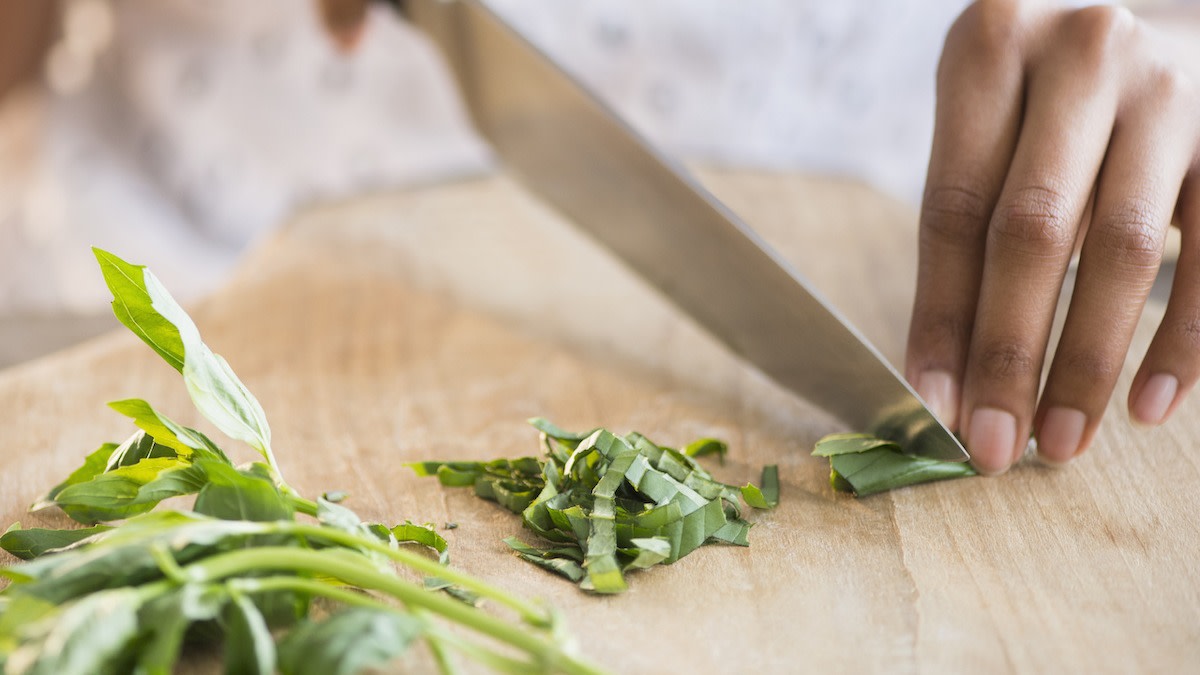
Chiffonade is a French cooking technique for slicing leafy herbs and vegetables—especially basil leaves—into thin ribbons. The word “chiffonade” comes from the French word chiffoner, which means to crumble. The unique slicing technique involves stacking and tightly rolling leafy herbs and vegetables, then slicing them at a perpendicular angle into thin strips that you can incorporate into salads, soups, pastas, and pizzas. The most common ingredients to chiffonade include herbs such as basil, mint, and sage, and leafy greens like spinach, Swiss chard, and lettuce.
What Ingredients Can You Chiffonade?
You can chiffonade thin, flat-leafed herb or leafy green vegetables. Firmer vegetables like carrots and zucchini call for a different slicing technique called “julienning.” The most common ingredients to chiffonade are basil, spinach, sage, mint, and Swiss chard. Learn more about cooking with herbs in our comprehensive guide to common culinary herbs.
When to Chiffonade
The thin slices produced by chiffonading are perfect for garnishing casseroles, soups, steaks, and chicken dishes. Chiffonading leafy herbs and vegetables allows you to seamlessly incorporate these ingredients into a dish, and avoid serving large bites of delicate herb leaves.
Gordon Ramsay Demonstrates How to Chiffonade Basil
How to Chiffonade
Chiffonading is a basic process with a handful of steps :
- 1. Prepare your leaves. To prepare your leaves for this slicing technique, rinse them in cold water, pat them dry, and remove the leaves from the stem.
- 2. Roll up the leaves. Stack the leaves in a small, even pile and roll them up into a tight cylinder (that resembles a cigar). If you only need a small portion, simply roll up a single leaf for slicing.
- 3. Slice the leaves. Hold the roll down on the cutting board with one hand and slice perpendicular down the cylinder’s length, cutting through the roll with each motion. Keep the tip of your knife against the cutting board the entire time, to maintain control and achieve the thinnest slices possible.
- 4. Fluff the pile. After cutting the entire roll, use your fingers to fluff the pile a few times to separate the ribbons from one another and help them unfurl. Use these little ribbons as garnishes atop any dish, or mix them into salads or pasta for extra flavor. You can practice your chiffonade cutting technique by preparing Gordon Ramsay’s lobster ravioli with basil chiffonade.
Want to Learn More About Cooking?
Become a better chef with the MasterClass Annual Membership. Gain access to exclusive video lessons taught by culinary masters, including Chef Thomas Keller, Gabriela Cámara, Massimo Bottura, Dominique Ansel, Gordon Ramsay, Alice Waters, and more.


Gordon Ramsay’s Lobster Ravioli Recipe with Chopped Herbs
Oct 9, 2018

Couscous Tabbouleh: How to Make the Middle Eastern Salad
Jul 13, 2022

Bulgur Tabbouleh Recipe: How to Make Classic Tabbouleh
Jun 17, 2022

Farro Tabbouleh Recipe: How to Make Farro Tabbouleh
Jun 21, 2022

Cooking 101: Learn How to Master 9 Different Knife Cuts
Jun 25, 2019

Culinary Guide to Basil: Benefits and Uses
May 17, 2019
Other articles
How to Grow a Home Herb Garden: Gardening Guide for Growing Herbs Indoors
Jun 21, 2019
Gordon Ramsay’s Basic Knife Skills: How to Use a Knife
Sep 21, 2018
Learn Knife Skills: How to Julienne Carrots and Onions 3 Ways
Apr 25, 2019
Mezzaluna Pasta Recipe: Filling Ideas and Cooking Tips
Mar 21, 2022
What Are Truffle Mushrooms? Learn About This Culinary Delicacy and Different Ways to Use Truffles in Cooking
Aug 5, 2019
How to Use Endives: 3 Tips for Preparing Endives
May 19, 2020