How to Make Puréed & Mashed Potatoes With Thomas Keller
Written by MasterClass
Last updated: Feb 17, 2026 • 3 min read
Learn the ideal uses for different varieties of potato from Chef Thomas Keller.
Red Bliss potatoes, a waxy variety, have high moisture and sugar content. When roasted or fried, they brown very quickly but do not become crisp. They may be gummy when mashed and are instead best for boiling and steaming.
The Russet potato was originally hybridized in the 1870s and exploded into popularity in post-WWII America with the advent of fast-food and frozen french fries. Russets now account for 70 percent of potato sales in the United States. Russets are considered a “floury” potato with large starch granules; therefore, they are not ideal for mashing, as they will have a coarse texture. They are best for baking and frying.
Yukon Gold potatoes are a “jack of all trades” potato. They are suitable for frying, baking, puréeing, and boiling, but they may not be the best in each cooking method. Yukon Gold potatoes were developed in Canada in the 1960s, as a hybrid of ancient Peruvian golden potato varieties. Thanks to their fine texture, dry interior, and good flavor, they quickly found favor in the chef community when they became commercially available.
There are many varieties of fingerling potatoes you may encounter at your local market. Each may have different characteristics. We have highlighted the La Ratte fingerling potatoes as being the best potato to make pommes purée from. Their dry, finely textured flesh will produce the smoothest and most refined potato purée and will allow for the most fat to be incorporated.

Learn From the Best
Mashed Potatoes Versus Potato Purée
Creamy mashed potatoes are a classic American side dish, typically made by peeling the potatoes, dicing them, boiling them, and then mashing them while they cook in a pot. Perhaps you have memories of your mother using a potato masher to make this rustic dish, or perhaps a potato ricer to make it more refined. The French elevate this side dish by puréeing potatoes. For this dish, you leave the skins on the potatoes and cook them whole in order to prevent them from absorbing too much water, which in turn allows them to take on richer flavor from the cream and butter, making them more luxurious than even the best mashed potatoes. Patience is a must, as it takes time to properly incorporate the fat into the potatoes. Chef Keller shows you how to make this refined dish.
Also try: Pommes Purée.
Making a French potato purée starts with the right kind of potato. The best potato for this purée is the La Ratte fingerling, a dense French varietal that is renowned for its ability to absorb large quantities of cream and butter. Yukon Gold potatoes are a great substitute and are much more readily available in America.

Recipe: How to Make Potato Purée
makes
Ingredients
Ingredients
Equipment
Place the whole, unpeeled potatoes in a 3-quart saucepot and cover by 2 inches with cold water, slowly bring the water to a gentle simmer. Starting them in cold water prevents the skins from breaking. Cook the potatoes until they are extremely tender when tested with a paring knife. When ready, turn off the heat.
Working one potato at a time, remove from the water, place on the tamis, split the potato in half, and press the flesh through the screen using a stiff bowl scraper, while leaving the skins behind. It is a good idea to place a sheet of parchment paper underneath to collect the passed pulp.
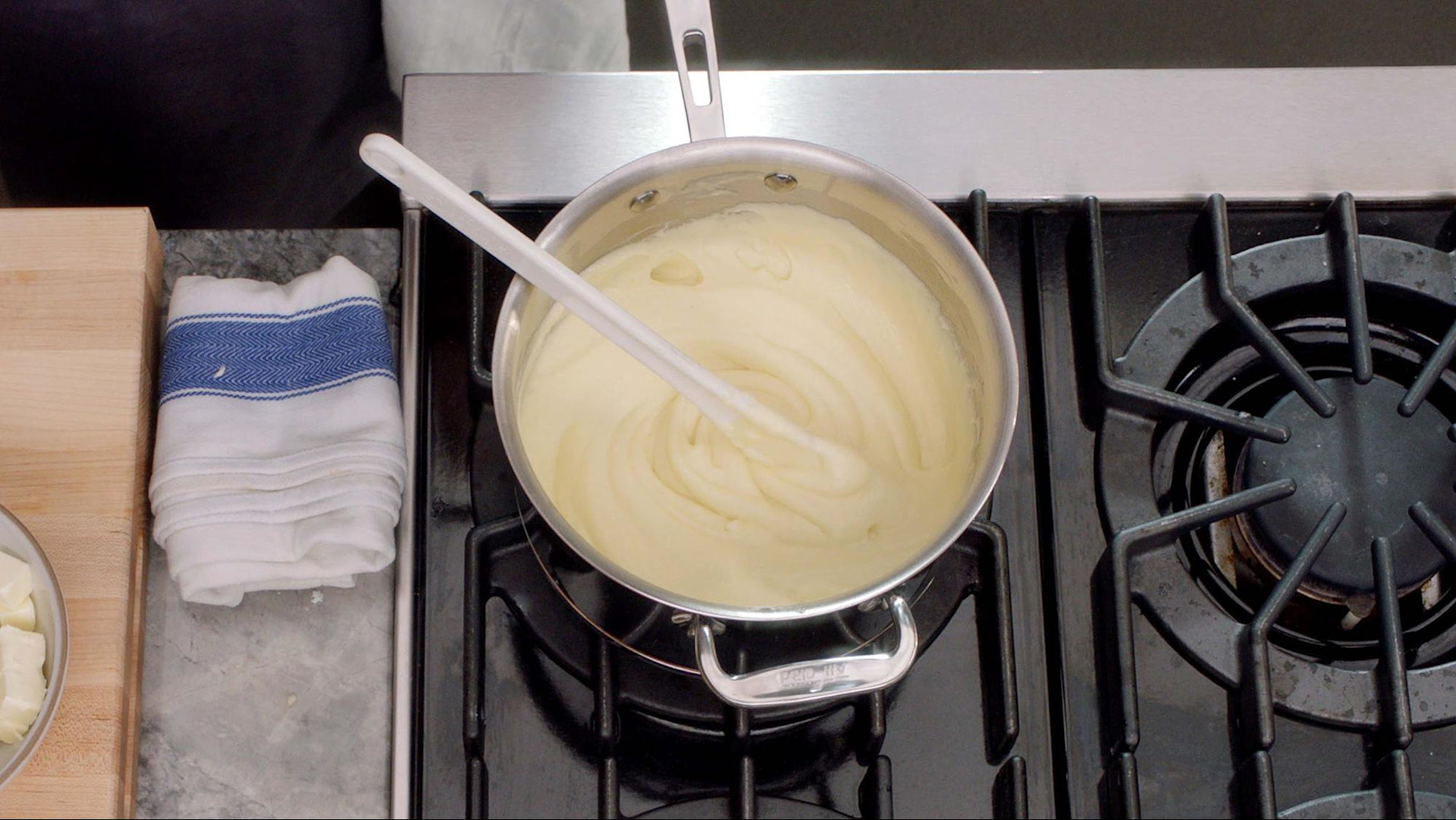
Once all of the potatoes have been passed, transfer them to a 4-quart saucepan. Warm the saucepan over medium-low heat, use a stiff rubber spatula to incorporate ⅓ of the hot cream into the potatoes, and beat in a few cubes of butter with the rubber spatula until the butter is emulsified into the potatoes. Drizzle in a little clarified butter. Clarified butter adds a more intense butter flavor than whole butter.
Keep adding the cream, butter, and clarified butter to develop a creamy purée. The ideal pommes purée should have a milky, creamy appearance. If the purée begins to look oily with the fat separating from the potatoes, the emulsion is breaking. To restore the emulsion, you may need to add hot water periodically, just as you would for mayonnaise or hollandaise. Additionally, regulate the heat to allow the butter to be incorporated without losing the emulsion.
Once you’ve achieved your desired texture, season with salt, transfer to a serving bowl, and top with a pad of butter.


How to Cook Potatoes: Different Ways to Cook All Types of Potatoes
Dec 18, 2019

Chef Thomas Keller’s Pommes Chateau Recipe (Chateau Potatoes)
Oct 14, 2019

A Complete Guide to 12 Types of Potatoes
May 23, 2019

Dominique Crenn’s Pommes Purée Recipe
Apr 12, 2022

Potato Taco Recipe: How to Make Potato Tacos
May 17, 2022

What Are New Potatoes? All About Baby Potatoes
Nov 2, 2021
Other articles
Easy Potato Dishes: 8 Potato Recipes for Any Occasion
Sep 8, 2021
Potato Galette Recipe: How to Make a Classic Potato Galette
Jan 25, 2022
Mashed Rutabaga Recipe: How to Make Rutabaga Mash
Jun 1, 2022
Learn to Purée: Gordon Ramsay's Purée Asparagus Recipe
May 16, 2019
Potato Purée Recipe: 3 Tips for Making Potato Purée
Jun 2, 2021
Gordon Ramsay’s Recipe for Pomme Purée (Potato Purée)
Oct 17, 2018